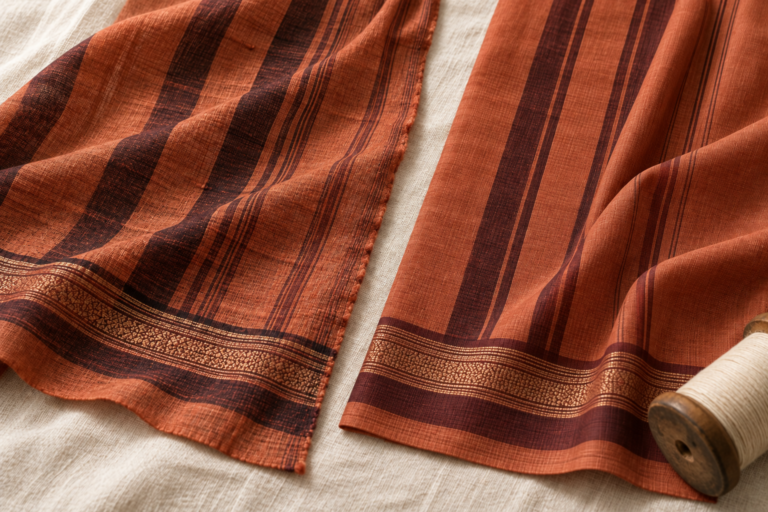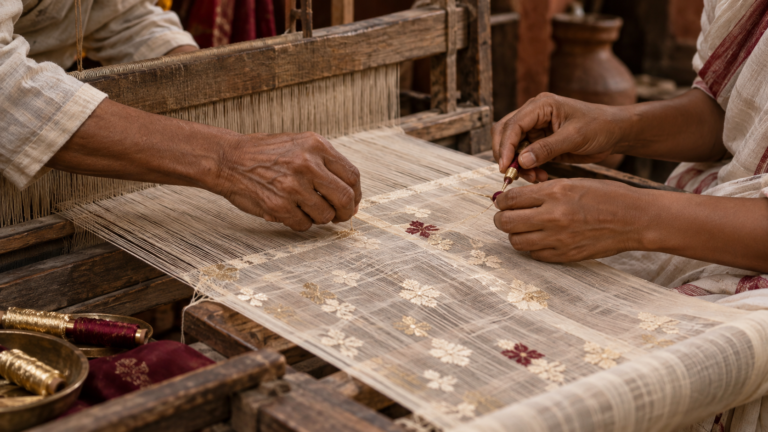
The Story of Jamdani: Bengal’s Woven Air
Two thousand years old, nearly lost to empire, UNESCO-recognised in 2013 — the story of Jamdani, Bengal's handwoven "woven air,"…
Read more 7 min read



· 4 min read
Share
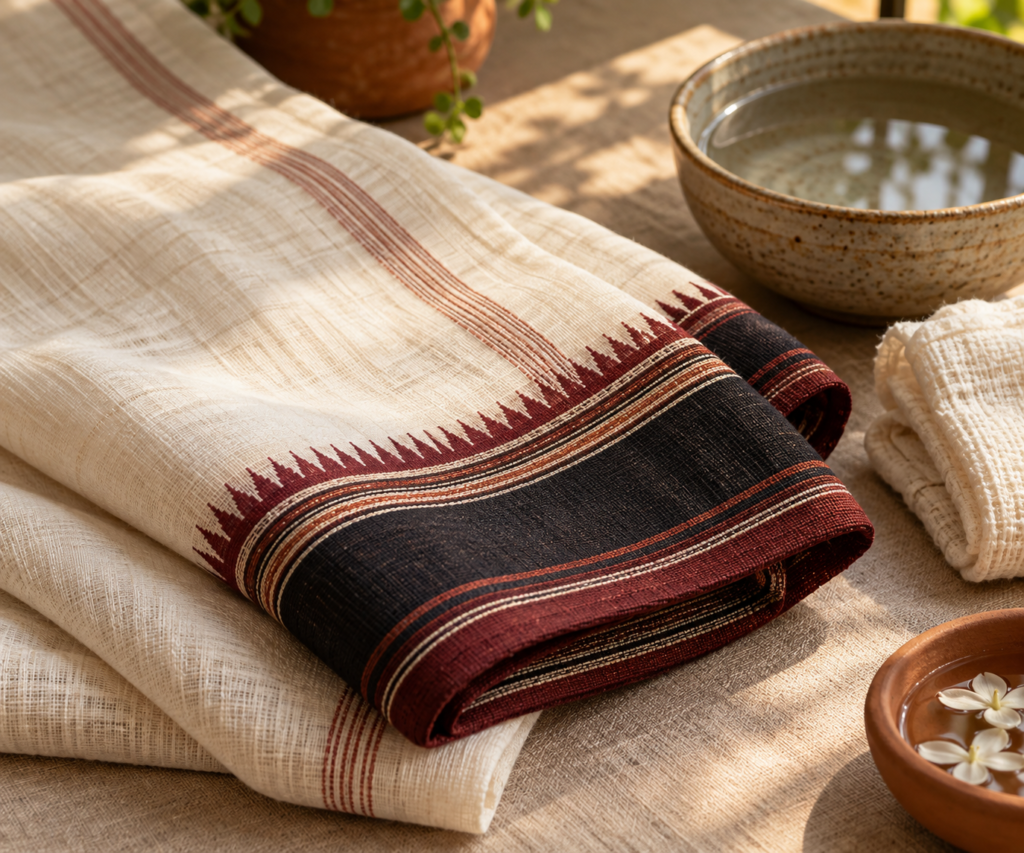
To remove sweat marks from cotton: blot the area with a clean cloth, rinse in cold water, work in a mild soap, and air-dry away from direct sunlight. Never use hot water or direct heat on the mark — both set it into the fabric permanently.
Cotton is breathable and absorbent, which is exactly why it’s the fabric of choice for Indian summers — and exactly why it holds onto sweat. This is especially true of handwoven cotton like Jamdani, where the fibre is left less processed than mill cotton, so it drinks up moisture (and holds onto it) even more readily. Sweat itself is mostly water, salt, and small amounts of protein. Left alone, especially in heat, that protein bonds with the cotton fibres. Once it’s bonded and dried in, a sweat mark stops being a surface stain and becomes part of the weave — which is why the fix that works on day one often doesn’t work a week later.
The underarm area of a cotton kurti and the blouse-adjacent portion of a saree pallu are the two spots this shows up first, because they sit closest to the skin for the longest stretch of wear.
As soon as you notice a mark, press a clean, dry cloth against it to lift surface moisture. Rubbing spreads the mark and works it deeper into the fibre — the opposite of what you want.
Cold water lifts the mark without disturbing the protein bond further. This is the step most people get wrong by reaching for warm water because it “feels like it should clean better” — for sweat marks specifically, it doesn’t.
A gentle, unscented soap worked into the area in small circles is usually enough. Harsh detergents and bleach are unnecessary on handloom cotton and can dull the fabric’s natural texture and colour over time.
Once rinsed clean, dry the piece away from direct sunlight. Heat — from the sun or a dryer — is what sets a sweat mark permanently if any trace of it is still there. Shade-drying protects both the stain treatment and the fabric’s colour.
This isn’t a saree-specific or kurta-specific fix — it’s a cotton fix. The same four steps work identically whether the mark is at the blouse edge of a Ponduru cotton handloom saree or the underarm of a cotton kurti set, which makes it worth remembering as a general rule for any handloom cotton piece in your wardrobe, not just the one you’re treating today.
It helps more on fresh marks, but a mild soap soak (cold water, a few hours, same gentle soap) can lift a lot of an older mark too. Very old, sun-dried-in marks may need a professional clean.
No — this routine is for cotton specifically. Silk needs a different, gentler approach and is best left to a professional cleaner for anything beyond a light sponge.
Aluminium-based antiperspirants can react with sweat to leave a yellow tinge over time, which is a different mark from a plain sweat stain and doesn’t respond the same way to cold-water treatment. If this is the pattern you’re seeing, a specialist stain remover made for antiperspirant marks works better than soap alone.
There’s no fixed rule, but treating a sweat mark within a day or two — rather than letting the piece sit in the wardrobe — is what actually prevents it from setting in.
Cotton handloom is meant to be worn often, not babied — a five-minute routine at the sink is usually all it needs. Browse RooiRang’s handwoven cotton Jamdani sarees and the Suits & Kurti Sets edit for everyday cotton pieces, or start with one we’d recommend for a first cotton wardrobe: the Black Handloom Cotton Jamdani saree.
Enjoyed this? Share it
Two thousand years old, nearly lost to empire, UNESCO-recognised in 2013 — the story of Jamdani, Bengal's handwoven "woven air,"…
Read more 7 min read
Not every "handloom" tag tells the truth. 7 simple checks — selvedge, reverse side, weight, sound — to spot a…
Read more 7 min read